

GRP Electrical Conduits
Reinforced thermosetting resin conduit (RTRC), filament wound from E-glass and epoxy, 1/2 to 8 inch, for corrosive, wet, outdoor and buried electrical installations. Designed to NEMA TC 14, UL 2515 and UL 2420.
Cable protection that does not corrode
Where steel conduit rusts and PVC becomes brittle, GRP conduit keeps its strength. Conduits, elbows and fittings share the same trade sizes and bell-and-spigot joint, so one system covers above-ground, exposed and buried routes, and the trade sizes match steel conduit fittings.
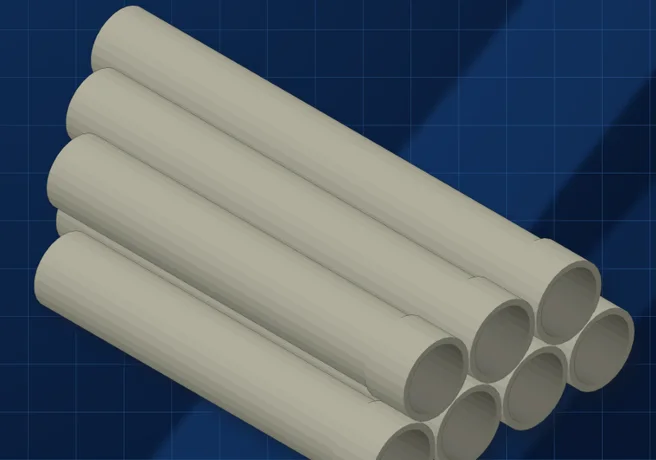
The system
Conduits above ground
Standard, heavy and extra heavy wall conduit in 3.05 m and 6.10 m lengths with an integral bell, for exposed and concealed runs.
Below-ground duct
Duct for direct burial and concrete-encased duct banks, 2 to 8 inch: light and long, for fewer joints and fast laying in trenches.
Elbows
90°, 45°, 30° and 22.5° elbows with standard radii and long sweeps up to 1,220 mm for long or heavy cable pulls.
Fittings and accessories
Couplings, NPT adapters to steel conduit and boxes, end bells, expansion joints, GRP and stainless steel clamps and epoxy adhesive kits.
Material and standards
- Material: continuous E-glass roving, filament wound, with anhydride-cured epoxy resin, about 70% glass by weight, UV stabilised
- Electrical: non-conductive and non-magnetic, no bonding to the earthing system needed
- Temperature: operating range from −40 °C to 110 °C
- Joint: bell and spigot, bonded with CASK two-part epoxy adhesive
- Designed to: NEMA TC 14.AG and TC 14.BG, UL 2515, UL 2515A, UL 2420, NEC Article 355, CSA C22.2 No. 2515
Where GRP conduit is used
Easy to install
GRP conduit is cut with a fine-tooth saw and joined with ordinary hand tools: no threading. Factory elbows are used for every change of direction, and the smooth bore keeps cable pulling tension low. The catalogue gives the joint steps, support spacing, thermal expansion and burial guidance, with the item number of every part: English (PDF) · العربية (PDF)
Frequently asked questions
When should I choose GRP conduit instead of steel or PVC?
In salt, acid, chemical and wet sites where steel corrodes, where a non-conductive conduit avoids bonding, and at low temperatures where PVC becomes brittle. GRP is also much lighter to carry and fit on site.
Can GRP conduit be bent on site?
No. Use the factory elbows (90°, 45°, 30° or 22.5°, standard or long sweep) for every change of direction.
Is the catalogue available in Arabic?
Yes. Download the English or Arabic catalogue at the top of this page.
Related products
Conduit for a corrosive or buried route?
Send us your route, the site conditions and the cables. We will propose the GRP conduit, elbows and fittings.
CASK Electric © 2026
Address: Çerkeşli Mah. Tavşancıl Sok. No: 72
Dilovası, Kocaeli, Türkiye
Phone: +90 216 410 22 44
Email: [email protected]
About
Divisions
Products
Catalogues & Brochures
Product Categories